
Hardly being able to stand up from your chair or walking down your stairs with the greatest of difficulty due to muscle soreness. Anyone who does strength training will naturally deal with muscle soreness from time to time. A little bit of muscle soreness is normal. In fact, to a certain extent, it is necessary for serious muscle growth. It only becomes a problem once muscle soreness prevents you from functioning normally. Literally being ill from muscle soreness is definitely not a healthy state of affairs. Fortunately, you can significantly reduce muscle soreness with a combination of stretching, nutrition and rest. In this article we share everything you need to know about muscle soreness.
How does muscle soreness occur?
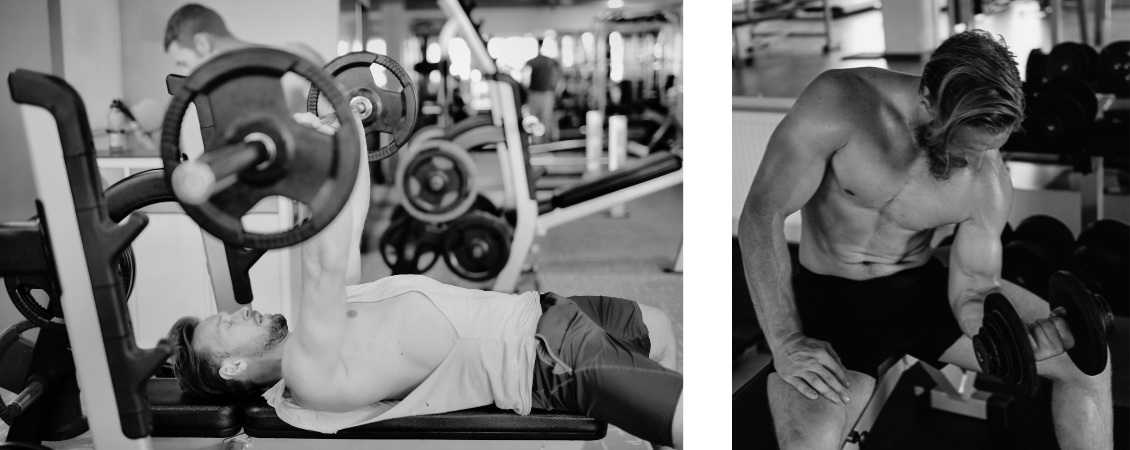
Muscle soreness after a workout is a well-known phenomenon and is caused by tiny tears in the muscle fibres that occur when your muscles work harder than they are used to. This can happen as a result of strength training, cardio or even an intensive walk. This type of muscle soreness is known as Delayed Onset Muscle Soreness (DOMS) and usually begins 12 to 24 hours after exertion, peaking at around 48 hours. The tears in the muscles cause inflammation, which is a natural response by the body to initiate the recovery process. During this recovery, the muscles are not only repaired but also strengthened, which is an essential process for muscle growth and increases in strength.
When do you experience the most muscle soreness
Muscle soreness can feel intense at first, especially with new exercises or when you start training again after a break. Particularly with exercises that place an eccentric load on your muscles, such as lowering a weight in a controlled manner, extra tension is created on the muscle fibres. This leads to more tears and therefore more muscle soreness. Beginners or people who significantly increase their training intensity notice that this muscle soreness is most severe in the first 24 to 48 hours after the workout. This is a natural part of your body's adaptation process and is often accompanied by stiff, tender muscles, which can sometimes even limit daily movements.
Severe muscle soreness is no gauge of a successful workout
As you train consistently and your body gets used to the strain, the intensity of the muscle soreness decreases. The body becomes stronger and learns to deal more efficiently with the forces exerted on the muscles. This does not mean that you are no longer making progress, but rather that your muscles are adapting and are better prepared for the exertion. By continuing to train regularly, you generally experience less muscle soreness after a workout, especially when you gradually increase the intensity and schedule enough rest days to promote recovery. Less muscle soreness therefore does not mean that you haven't had a good workout, quite the contrary!
Physically ill from muscle aches
Muscle soreness can be more than just a stiff or tender feeling. During intense training, microscopic tears occur in the muscles which activate the immune system to repair the damage. This process can cause fatigue, a low-grade fever, headaches and an overall feeling of malaise. Particularly after heavy exertion or unfamiliar exercises, waste products such as lactate accumulate, which contributes to an exhausted feeling. The recovery process reinforces this through the production of stress hormones such as cortisol, which can temporarily lower resistance. Some people even experience nausea and a disturbed night's sleep. Although muscle soreness goes away on its own, it is important to rest, stay well hydrated and continue doing light exercise to support recovery.
Reducing muscle soreness with protein
To reduce muscle soreness and accelerate recovery, good nutrition, adequate rest and sleep are essential. The body needs protein to repair damaged muscle fibres, so a high-protein diet, featuring low-fat dairy, chicken, eggs or plant-based alternatives, helps to promote recovery. The supplement whey protein can help you on days when you do not get enough protein from your diet. For the purest and most easily absorbable form of whey protein, choose our Beyond Hydrolysate.
Hydration essential for flushing out waste products
Hydration plays a crucial role in muscle recovery and reducing muscle soreness. Water helps to flush waste products, such as lactate and other by-products of intense exercise, out of the body more quickly. This accumulation of waste products can slow down recovery and worsen muscle soreness. Drinking enough fluids also supports the circulatory system, which ensures that oxygen and nutrients can reach the recovering muscles more quickly. This not only promotes the recovery process, but also reduces stiffness and pain after exercising.
Light movement combined with heat
Light exercise such as a walk or gentle stretching session can help to relieve pain and improve blood circulation in muscles. This keeps muscles supple and promotes the recovery process. Heat therapy, such as a warm bath, sauna or warm shower, can also be effective. The heat relaxes tense muscles and improves blood circulation, allowing nutrients and oxygen to reach the recovering muscles more quickly. Massages also offer benefits for muscle recovery by reducing knots and tension and stimulating circulation. This not only helps with faster recovery, but also reduces the build-up of waste products such as lactic acid, which relieves muscle soreness.
Working out without sickening muscle soreness
At Beyond, we offer support to optimise your recovery by finishing every training session with a cool-down. In this, we perform static stretches where we hold a muscle in a stretched position for about 15 to 30 seconds. This improves blood flow in the muscle tissue. This ensures that waste products, such as lactic acid, are removed more quickly and that more oxygen and nutrients can flow to the muscles. This can promote recovery and reduce the likelihood of severe muscle soreness.