
Body fat percentage indicates what percentage of your total body weight is made up of fat and is an important indicator of health and fitness. For women, a healthy body fat percentage is between 20% and 30%. Of course, no two bodies are the same, so this figure can vary depending on age, genetics and fitness goals. In the world of fitness, body fat percentage plays a crucial role: it affects your muscle definition, energy levels and overall fitness. In this article, we’ll explore all aspects of a healthy body fat percentage for women.
Biological differences between women and men
Body fat percentage naturally varies between men and women, mainly due to biological and hormonal factors. Women generally require a higher body fat percentage than men for optimal health. Whilst a healthy body fat percentage for men is usually between 10–20%, for women it is 20–30%. This difference is mainly caused by the female hormones oestrogen and progesterone, which prompt the body to store more fat, particularly around the hips, thighs and buttocks. This fat plays an important role in hormonal balance, fertility and antenatal preparation.
Fat storage crucial for the female body
Fat storage plays a crucial role in women's hormonal balance and fertility. Female hormones such as oestrogen and progesterone are essential for the menstrual cycle and reproductive health. Adipose tissue acts as an important endocrine organ that produces oestrogen. A healthy amount of body fat helps to regulate these hormones. Too much or too little fat can lead to hormonal imbalances that result in irregular periods. In addition, a healthy body fat percentage is important for fertility. Women with too low a body fat percentage may experience ovulation problems, which reduces the chance of pregnancy. On the other hand, too high a body fat percentage can lead to insulin resistance and other metabolic problems that negatively affect fertility.
Calculators concerning body fat percentage not always reliable
Many women who want to measure their body fat percentage eventually end up using handy online calculation tools and mathematical formulas. These tools make it easy to quickly get an estimate by entering a few basic details, such as weight, waist circumference and age. Although this seems convenient, it is important to realise that every body is unique and these standard calculations are not always accurate. Factors such as body frame, muscle mass and genetic variation influence your body fat percentage, but are often not taken into account in most online tools. For a truly accurate and reliable measurement of your body fat percentage, it is wise to consider skinfold measurements or BIA technology.
Calculating body fat percentage via a skinfold measurement
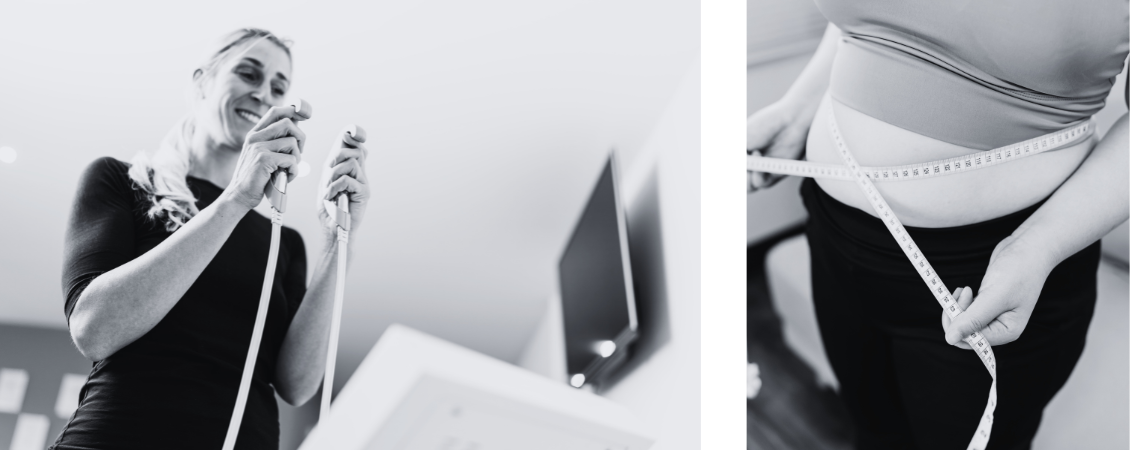
A skinfold measurement is a popular and effective way to determine body fat percentage in women. During this measurement, specific skinfolds on various parts of the body are measured, usually the triceps, abdomen and thigh. A trained professional uses skinfold callipers to measure the thickness of the skinfolds. These measurements provide an indication of subcutaneous fat. The results of the skinfold measurement are then entered into specific formulas that take gender and age into account. This allows an estimate of the total body fat percentage to be made.
Measuring body fat percentage using BIA technology
The Bio-Electrical Impedance Analysis (BIA) technique is a popular method for measuring body composition. BIA offers insight into, for example, body fat percentage, muscle mass and fluid balance. It works by sending a weak electrical current through the body via electrodes. As the current travels through the body, it encounters resistance (impedance), which differs between fat and muscle tissue. Fat tissue conducts electricity less well than muscle tissue, allowing the machine to use this data to estimate the ratio of fat and muscle mass.
Lowering body fat percentage with a low-fat diet and exercise
To reduce your body fat percentage as a woman, a combination of a healthy diet, regular physical exercise, and lifestyle changes is essential. Start with a balanced diet rich in vegetables, fruit, whole grains, lean proteins, and healthy fats. Limit your intake of processed foods and sugars, and maintain a calorie deficit to encourage fat loss. Combine cardio and strength training: cardio such as running or cycling helps with fat burning, while strength training builds muscle mass and increases your metabolism. Aim for at least 150 minutes of moderate to vigorous exercise per week. In addition, ensure you get enough sleep, as sleep deprivation can lead to weight gain.
Want to reduce your body fat percentage with an experienced trainer?
BEYOND offers women an effective approach to reducing their body fat percentage by using modern technology and expert guidance. Every location features BIA technology, which enables precise fat measurements to be taken. This gives us insight into your body composition, which forms the guiding thread of a bespoke action plan. With the right mix of diet and exercise, we reduce your body fat percentage to the desired level.